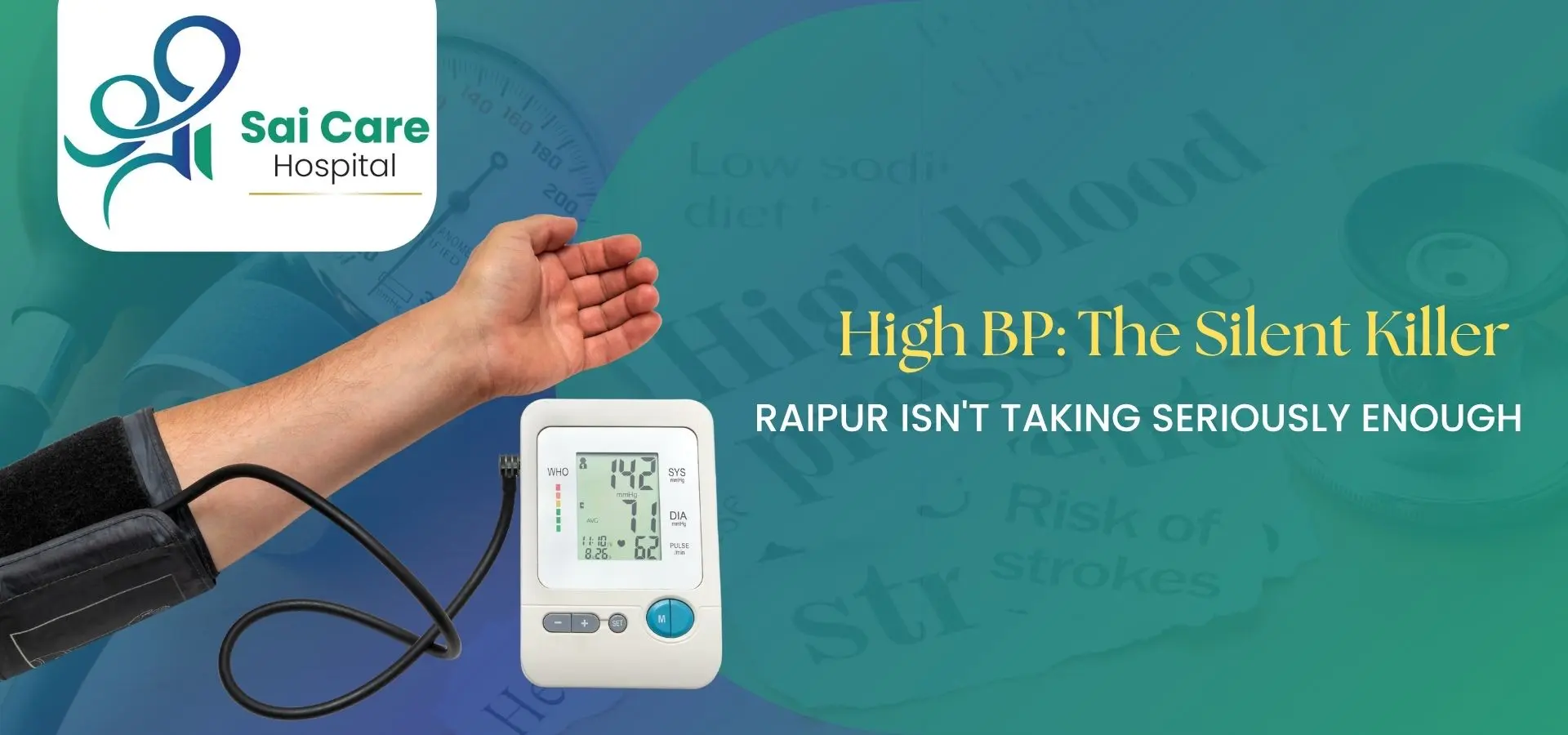
High blood pressure — or hypertension — is the most common chronic condition in India, and one of the least taken seriously. In Raipur and across Chhattisgarh, millions of people are walking around with dangerously high blood pressure right now — and most of them do not know it.
This is why it is called the silent killer. It has no symptoms. It feels like nothing. Until it causes a heart attack, a stroke, or kidney failure.
High blood pressure almost never causes symptoms — even when it reaches levels that are quietly damaging your organs. Over months and years, it causes:
Most people with high BP have no symptoms. At very high levels, symptoms may include:
If any of these occur suddenly — this is a medical emergency. Call 96300 67422 or come to Shree Sai Care Hospital immediately.
Lifestyle changes — first for everyone:
Medications: When lifestyle changes are insufficient, or BP is at Stage 2 or higher, medications are prescribed. Critical: BP medications must be taken every day — even when you feel well. Stopping them means BP goes straight back up.
Why is high BP called the silent killer?
It rarely causes symptoms even at dangerous levels — quietly damaging the heart, kidneys and brain over years.
What is normal BP?
Below 120/80 mmHg. Stage 1 hypertension begins at 130/80. Stage 2 at 140/90.
What are the warning signs?
Most people have none. At very high levels: severe headache, dizziness, chest pain, vision changes — these are emergencies.
How often should BP be checked?
Every 2 years if normal, annually if elevated, more frequently if diagnosed or diabetic.
Is treatment available in Raipur?
Yes — Dr. Jaykumar Patel, Medicine & Diabetes Specialist, Shree Sai Care Hospital, Raipur.
Medical Disclaimer: This blog is for general awareness only. It does not constitute medical advice. Please consult Dr. Jaykumar Patel or a qualified physician for advice specific to your health situation.
Dr. Jaykumar Patel — MD (Medicine)
Physician & Internal Medicine Specialist
Shree Sai Care Hospital, Raipur
Special interests: Diabetes · Hypertension · Thyroid · Fever & Infection · Respiratory · Gastrointestinal Disorders
Shiv Mandir ke paas, Avanti Vihar, Telibandha, Raipur (C.G.)
96300 67422 · 0771-4020089
Shiv Mandir ke paas, Avanti Vihar,
Telibandha, Raipur, Chhattisgarh